Food begins to spoil soon after harvesting. Spoilage is caused by physical damage such as bruising or punctures, by enzymes or by microorganisms. Microorganisms are everywhere-in the soil and air, on people and animals and on surfaces.
Mold grows well on high acid foods (pH of 4.6 or less) such as fruits and tomatoes or on low acid foods like vegetables and meats. Temperatures between 140°F-190°F will destroy mold. Yeast also grows in high or low acidic environments and may cause foods to ferment. It can be destroyed between the temperatures of 140°F-180°F.
Bacteria grows and multiplies on food rapidly. Food will become slimy, soft and smelly. Some bacteria cause infections or produce toxins (poisons) causing illnesses. Each varies as to the temperature at which it can grow, but most are destroyed by heat. Others form spores which can only be killed by boiling temperatures (212°F at sea level). It is because of the bacterium-Clostridium Botulism that some home canned foods must be processed in a pressure canner so temperatures can reach at least 240°F.
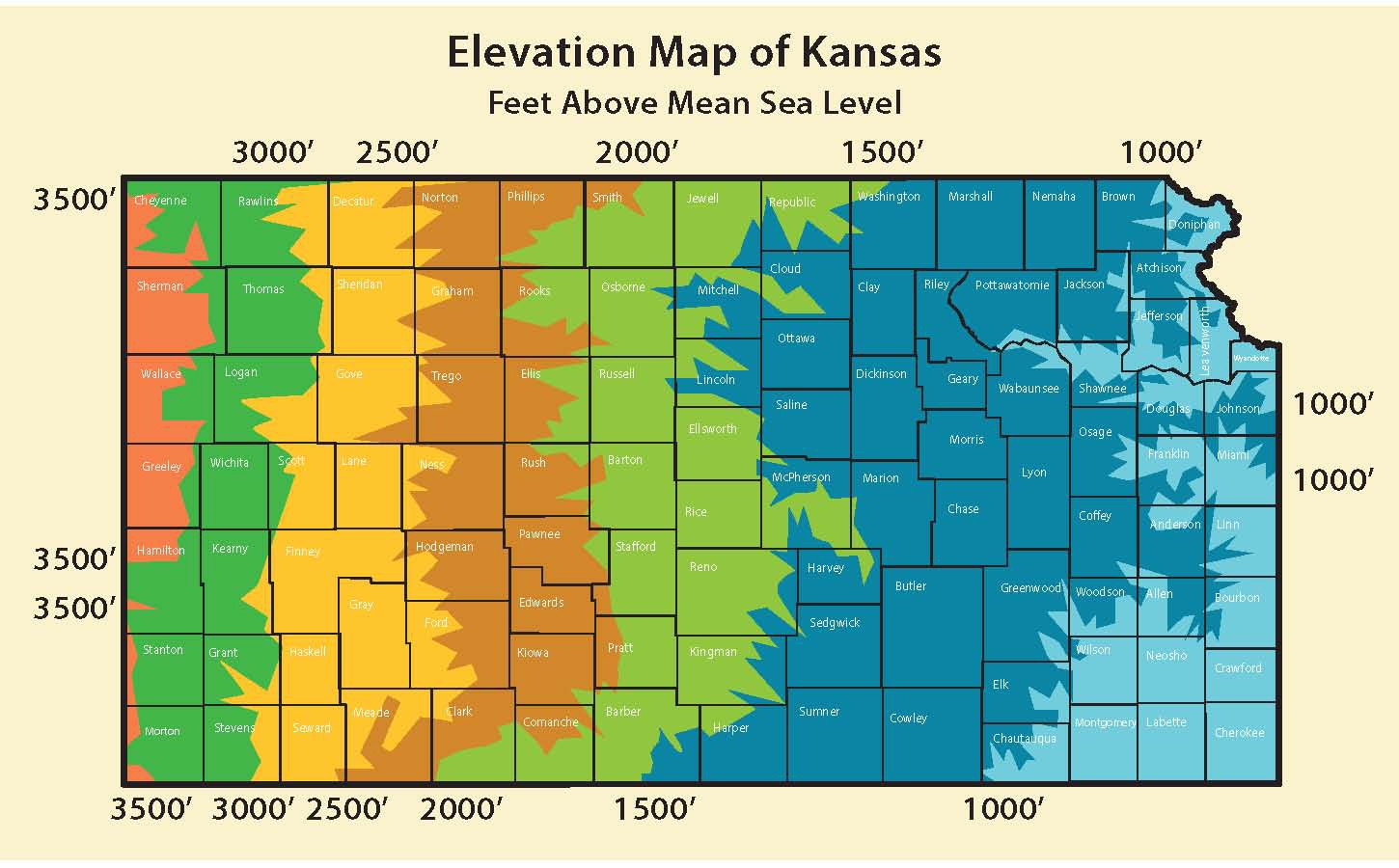
Elevation Map of Kansashttps://www.frontierdistrict.k-state.edu/health-nutrition/food-preservation/docs/Elevation%20Map.jpgY